Shooting Sticks vs. Bipods: Which Is Better for Your Hunt?

A steady rifle gives you a better chance to make a clean, ethical shot. That part is obvious. The harder question comes when you need to choose your support system: should you carry shooting sticks, mount a bipod, or bring both?
The right answer depends on how you hunt. A bipod excels when you can shoot from a low, stable position. Shooting sticks give you more height, flexibility, and freedom to shoot from standing, kneeling, or sitting positions.
So, which one belongs in your hunting gear? Let’s compare them by the factors that actually matter in the field.
Shooting Sticks vs. Bipods: The Basic Difference
A bipod attaches directly to your rifle. Most models use a sling swivel stud, Picatinny rail, or M-LOK mounting point. Once installed, the bipod stays with the rifle and deploys quickly when you need a front rest.
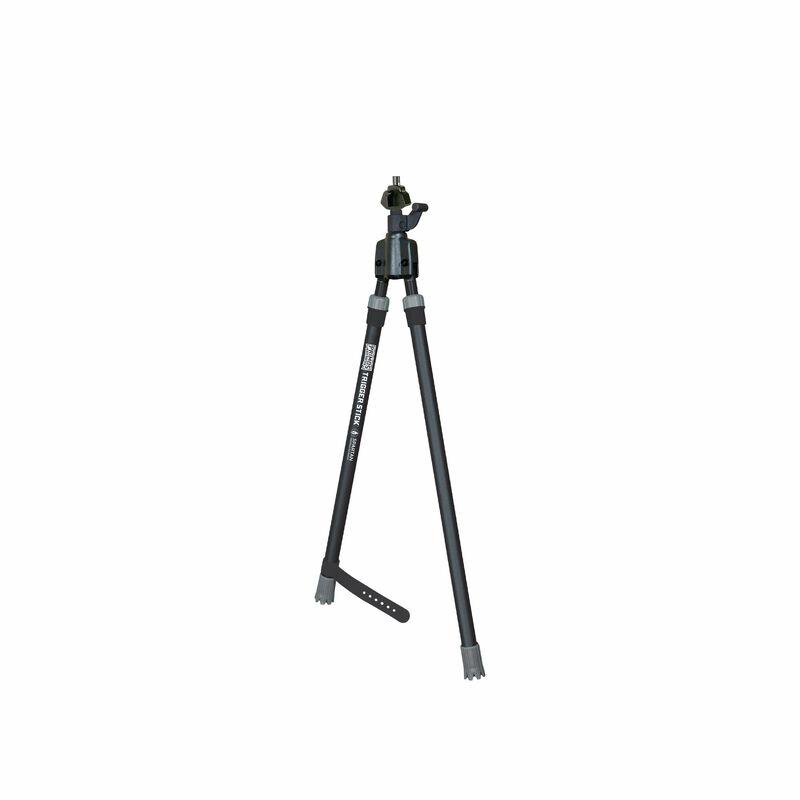
Shooting sticks work as a separate support system. You place the rifle into a cradle, yoke, or crossed-stick rest. Many models use two legs, three legs, or four legs, with adjustable height for different shooting positions.
That difference affects everything from rifle balance to setup speed. A bipod becomes part of your firearm accessories. Shooting sticks become part of your carried hunting gear.
Rifle Stability: Which Support Holds Steadier?

For pure stability from a prone position, a quality bipod usually wins. You can plant the legs, build a solid position behind the rifle, and use your body to create a repeatable shooting platform. The low profile also reduces movement from wind and small shifts in your position.
A bipod works especially well for open fields, ridgelines, prairie-style terrain, and range practice. If you plan to shoot from a ground blind or a fixed position where you can comfortably get low, a bipod gives you excellent support.
Shooting sticks still provide strong stability, especially when you use a three-leg or four-leg model. They perform better than a bipod when you need to shoot from a seated, kneeling, or standing position. That extra height comes with a small tradeoff: the rifle usually moves more than it would on a properly loaded bipod from prone.
Here’s the reality: stability depends on position. A bipod dominates from prone. Shooting sticks dominate when the terrain forces you higher.
Portability and Hunting Pack Weight
A bipod adds weight directly to your rifle. That weight may seem minor at the bench, but you notice it after a long stalk or several hours carrying the rifle through thick cover. A mounted bipod can also change the balance of the firearm and catch on brush or clothing.
Shooting sticks add weight to your pack or your hands instead of the rifle. Many models fold down quickly and attach to a pack with a strap or compression cord. You can also move one set of shooting sticks between several rifles, which gives them an advantage if you hunt with different platforms.
For lightweight hunting gear, shooting sticks often make more sense for mobile hunters. You keep the rifle streamlined and deploy support only when you need it.
That said, a compact bipod offers impressive convenience. You never need to remember a separate support system because it rides with the rifle. Convenience has a way of winning arguments in the field.
Terrain and Vegetation: Match Your Support to the Ground
A bipod performs best on terrain that allows a low shooting position. Open ground, short grass, harvested fields, rocky slopes, and prepared blinds all suit a bipod. Tall grass and dense brush create problems because a short bipod may not lift the rifle above the vegetation.
Shooting sticks give you more options in uneven or overgrown terrain. You can adjust the legs to compensate for slopes, set the rifle above brush, and remain ready from a higher position. That makes shooting sticks a strong choice for whitetail hunting in mixed timber, field edges, and areas where prone shooting rarely works.
Ask yourself a simple question: where will your rifle sit when an animal appears?
If the answer is “on the ground or a low rest,” choose a bipod. If the answer is “probably standing, kneeling, or sitting,” shooting sticks give you more practical support.
Setup Speed During Hunting Season
Both systems deploy quickly, but they demand different preparation.
A mounted bipod stays attached to the rifle, so you only need to fold out the legs and settle into position. That makes it highly effective from a ground blind, predator stand, or known shooting location.
Shooting sticks can deploy just as fast when you set the height before the action starts. Adjustable models work best when you practice opening them with gloves and learn the leg controls by feel. If you wait until the last second to adjust every section, the deer will not politely pause while you finish your engineering project.
Two-leg shooting sticks usually deploy fastest. Tripod and quad sticks take slightly more coordination but offer better stability and height. For active stalking, that tradeoff makes sense because you gain a wider range of usable shooting positions.
Shooting Positions: Prone, Sitting, Kneeling, and Standing

Your preferred shooting position should guide your decision.
Bipods for Prone and Low Seated Shooting
Bipods excel when you can get prone. They also work from low seated or kneeling positions if the model offers enough leg adjustment. A bipod gives you a consistent front rest and pairs well with a rear support such as a pack or shooting bag.
This setup suits long-range practice, open-country hunting, varmint hunting, and fixed-position deer hunts. Your rifle remains stable, and your body can support the rear of the firearm.
Shooting Sticks for Standing and Kneeling Shots
Shooting sticks shine when you need elevation. A tall tripod or quad-stick system can support a rifle from standing, kneeling, or seated positions. Many hunters also use shooting sticks as a quick rest during still-hunting or when covering field edges.
Two-leg shooting sticks offer speed and simplicity. Three-leg models provide better balance and easier panning. Four-leg systems offer the most support for standing shots but usually add more bulk and setup time.
Practice matters more than advertising claims. You should never choose a support system based only on a promised maximum distance. Your ability to build a stable position, control the rifle, and place an ethical shot matters far more.
Rifle Compatibility and Mounting Requirements
A bipod requires a compatible mounting point. Before buying one, inspect your rifle’s fore-end and confirm whether it uses a sling stud, Picatinny rail, M-LOK slots, or another interface. You also need to confirm that the bipod clears your stock, magazine, and other firearm accessories.
Shooting sticks do not require a permanent rifle modification. They work with most hunting rifles as long as the cradle or yoke fits the stock securely. This universal design makes them useful for families, hunting partners, and anyone who changes rifles between seasons.
Your rifle and optic setup also need to work together. A stable rest helps you get the most from your hunting optics, whether you use a traditional riflescope, rangefinder, or compact red dot. Iron Valor Armory’s Sig Sauer Buckmasters riflescope provides one example of the type of hunting optic that benefits from a repeatable, well-practiced shooting position.
Wet Weather, Cold Temperatures, and Mud
Weather exposes weak gear quickly.
Bipods can collect mud around the hinges and feet, especially when you use them in wet ground or soft soil. Shooting sticks can face the same problem, with the added concern of multiple leg locks and adjustment points.
Choose supports with positive-locking mechanisms and durable feet. Practice opening and closing them with cold or gloved hands. After a wet hunt, wipe away mud and moisture before storing the support. A little maintenance prevents frozen adjustments and unwanted noise later.
You should also protect your rifle and optics from condensation. Keep lenses capped when you move through changing temperatures, and inspect mounting hardware after repeated use. Browse the Iron Valor Armory shop for hunting gear and firearm accessories that help complete a weather-ready setup.
Which Support Works Best for Different Hunts?
Deer Hunting From a Blind or Fixed Stand
A bipod works well when your blind allows a low, stable shooting position. Shooting sticks work better when you need to shoot over tall grass or maintain a seated or standing position.
Still-Hunting and Spot-and-Stalk
Shooting sticks usually win for mobile hunts. They remain separate from the rifle, adapt to changing terrain, and provide support without forcing you to get prone in wet leaves or thick brush.
Open-Country Hunting
A bipod is the better primary choice when you expect long sightlines and can shoot from prone. A lightweight set of shooting sticks still makes a useful backup for slopes, brush, or seated glassing positions.
Predator Hunting
Choose based on your setup. A bipod suits a low calling position. Shooting sticks help when you need to scan and shoot from taller cover or move between several calling locations.
For better field observation, pair your shooting support with practical spotting scope guidance and a stable optic setup.
Shooting Sticks or Bipods: The Practical Recommendation
If you mainly hunt from prone or low seated positions, choose a bipod. It provides the most repeatable stability, stays attached to the rifle, and deploys instantly when you need a front rest.
If you move constantly through varied terrain, choose shooting sticks. A quality tripod or quad-stick system gives you more usable positions, keeps your rifle lighter, and handles tall grass, brush, and uneven ground better.
For many whitetail hunters, shooting sticks make the better all-around hunting accessory. They match the standing and seated positions that real Eastern North Carolina terrain often demands.
The best setup for serious hunters may include both. Carry a compact bipod when you know you can shoot prone, and keep shooting sticks available for terrain that forces you higher. That combination gives you options without asking one tool to do everything.
Safe Firearm Handling Comes First
Always treat every firearm as loaded, even when you believe it is unloaded. Keep the muzzle pointed in a safe direction, keep your finger outside the trigger guard until you have identified your target and decided to fire, and confirm what lies beyond the target.
Set up your bipod or shooting sticks with the action open whenever practical. Make sure the support does not interfere with the trigger, magazine, safety, or safe handling of the rifle. Never use a support system to justify a rushed shot or an uncertain target.
Before hunting, review the current North Carolina hunting regulations for your species, county, season dates, legal weapon requirements, game-land rules, and any blaze-orange requirements. Regulations change, and responsible hunters check the current rules before opening day.
Local Hunting Gear Support Near Rocky Mount, NC
Rocky Mount, NC serves as Iron Valor Armory’s primary local center for hunters and shooting sports customers looking for dependable hunting gear, firearm accessories, hunting optics, and specialized outdoor equipment. We also serve Wilson, Tarboro, Greenville, Roanoke Rapids, Henderson, Goldsboro, Elm City, Sharpsburg, Bailey, Middlesex, Wake Forest, Clayton, Smithfield, Kinston, Knightdale, Rolesville, and Youngsville. Explore the shop to build a support system that matches your rifle, terrain, and hunting style.
Final Takeaway
Shooting sticks and bipods solve the same basic problem: they help you hold the rifle steady when the moment arrives. They simply solve it in different ways.
Choose a bipod for low, stable, repeatable shooting. Choose shooting sticks for mobility, height, and changing terrain. Then practice with your chosen support before the season starts.
The right gear should make the shot simpler, not more complicated. That is the standard worth carrying into the field.
- https://cdn.marblism.com/kVyhgKprgz5.webp
- https://cdn.marblism.com/uRvlEA8mIus.webp
- https://cdn.marblism.com/kEYQkofi0LH.webp
Internal Links Included:
Published by Iron Valor Armory · Rocky Mount, NC 27803
Shop optics & sights →Shop optics & sights in stock
Related articles
All articles →
deer hunting
Glass More, Walk Less: How to Scout Deer with a Spotting Scope Before the October 17 Opener
North Carolina’s northeastern gun deer season opens October 17, 2026. Use the next ten days to scout field edges, cutovers, and public land with a spotting scope while keeping deer pressure low.

hunting suppressors
Do You Really Need a Suppressor for Hunting? Here's the Truth
A suppressor can reduce noise, recoil, and muzzle rise while helping you spot shots, but it also adds weight, length, cost, and a federal approval timeline. Here is what North Carolina hunters should know before buying one.

hunting season
Wind, Thermals, and Scent Control: How North Carolina Deer Hunters Beat a Whitetail's Nose
October's warm days and cool nights make wind and thermals unpredictable. Here's how to build a scent-control system around your gear, apparel, and field routine before the October 17 opener.